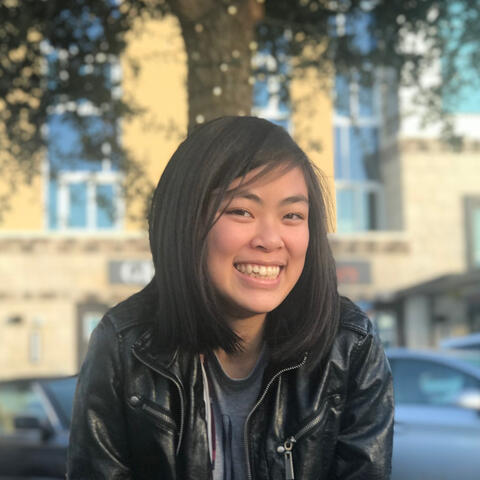
Andie Zhou


Barrio Apartments
Tucson, AZ
This project was mainly concerned with the design of an affordable housing complex in Tucson's Old Barrio district. The building takes the shape of an inverted L - the long side consists of double height studio apartments, and the short side is split between communal living space and one-bedroom apartments. The remainder of the site is allocated towards an outdoor courtyard, with the shared spaces being able to open up towards it.


Bisbee Community Center
Bisbee, AZ
The site for this community center project is a rather steeply sloped empty lot in the heart of Bisbee, Arizona, a small town known for its large artist and artisan population.Most of the earth on the site has been removed, creating a void that the building nestles itself into. This results in the creation of a shaded courtyard, where the sheer height of the left side of the site casts a large shadow over the multiple floors of the community center even during the summer.All spaces on all floors are easily accessible from a central circulation core, which contains an elevator bank and a grand staircase.


resourceXchange
Tucson, AZ
The Sonoran Canyon resourceXchange serves as an example of a building designed to be an environmental teaching tool in both form and function. Public, teaching, and research spaces are integrated into a pair of buildings framed by a canyon-like facade and angled to better take advantage of environmental condition on the site.By designing the basic form of the building to benefit from and work with the quirks of its surrounding environment, the Xchange draws one step closer to being fully entrenched in both the urban and environmental fabric of Tucson.This project was a finalist in the Building Envelope category of the 2021 Richard Kennedy Architects prize.


Placa de la Transformació
Barcelona, Spain
This social housing project, located in the heart of Barcelona's Poblenou district, aims to preserve the circulation and connection between both bordering streets while providing housing and public amenities to the surrounding neighborhood.As Barcelona's city grid is oriented at a 45 degree angle with the top right corner of the site facing north, the building is situated in a curved L shape with its corner to the north; this allows every apartment as well as the adjoining plaza to receive sunlight at all times of the year. The curved corner of the building contains six studio apartments and six 1-bedroom apartments, staggered in a way that allows air and light to permeate the curve from all directions. This eliminates the common "corner problem" that L-shaped buildings tend to have, as well as emphasizing the connection between both sides of the site.The existing wall, formerly from the transformer that used to stand on the site and subsequently preserved as a sign of the power of community organization, was kept to serve as a natural barrier between the quieter plaza and the more robust dining and play area bordering the site on the northwest.


entanglement
Cupertino, CA
This project has two phases.The first phase consists of the research, mapping, and preliminary design aspects of a potential urban retrofitting project located in Northern California.
The second phase sees the research documented in Phase 1 used to develop a full-fledged urban retrofitting project, now dubbed Entanglement.
Entanglement consists of a series of five sites: three in the master plan stage and two with more in-depth designs. The goal of this retrofit and redesign is to introduce "third spaces" - public areas that are not coded as the home or the workplace, but as areas that encourage casual social interaction - to suburban areas, which are often sorely lacking in this department.Due to the large size of the presentation, this project is viewable below in PDF form.
Extras
Architectura
A photography project that reframes Europe through the use of architecture as a frame.
rowhouse lamp
Custom designed and built for a rowhouse situated just off of the University of Arizona's main campus, this lamp primarily utilizes reclaimed douglas fir beams from the university’s Old Main building. Its shape is intended to invoke the overall silhouette of a barrel cactus, a common sight in Tucson’s Sonoran desert.


About
I have a bachelors' degree in architecture from the University of Arizona and a masters' degree in game design from New York University.I am also endlessly fascinated by the effects architecture can have on digital media - particularly in the field of video games and virtual environments, where the crafting of virtual spaces is no less impactful than physical ones.